
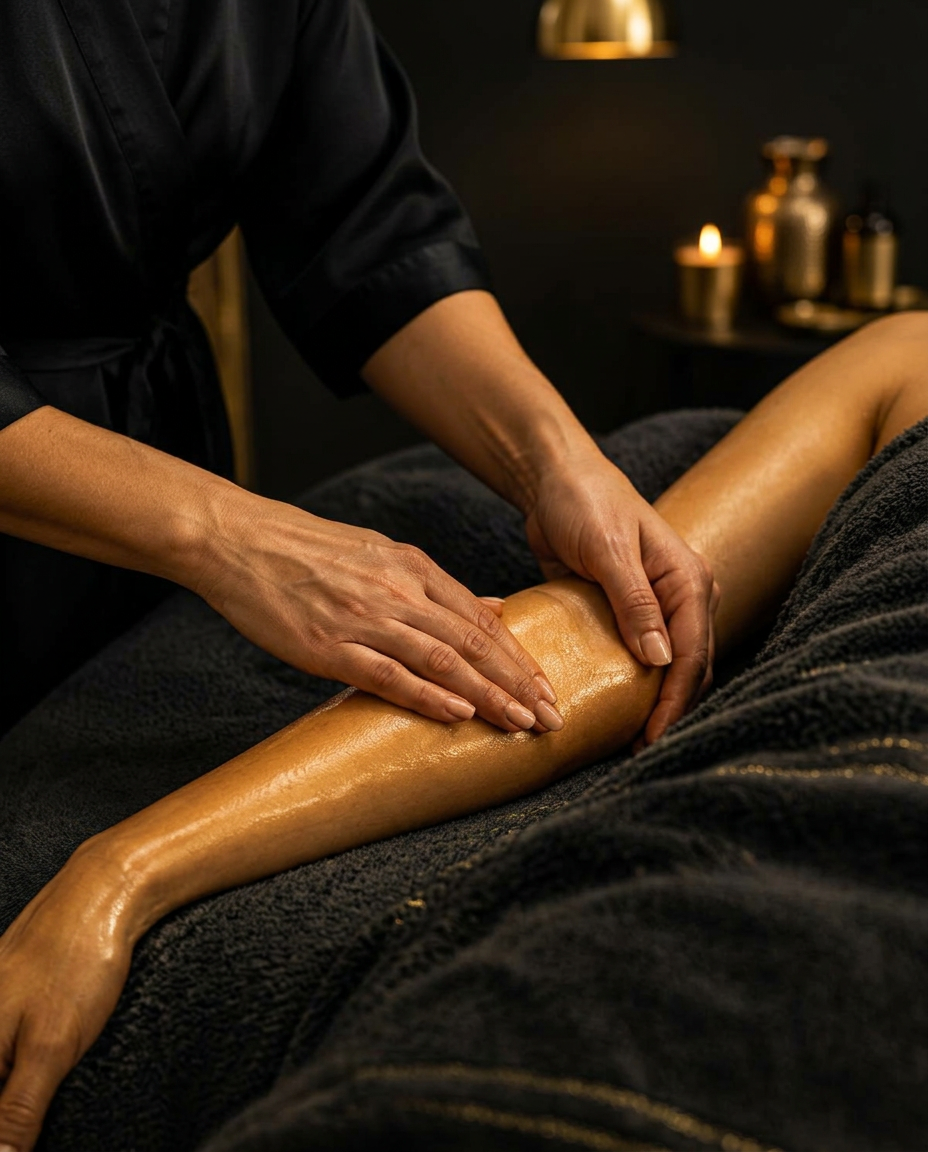
01 · What lymphatic massage actually does
Your lymphatic system collects excess fluid from tissues and returns it to your circulation. Lymph nodes also support your immune system. When fluid builds up, an area can feel swollen, tight, or heavy.
Manual lymphatic drainage (MLD) uses gentle, rhythmic skin movements to encourage lymph flow toward functioning drainage pathways. It is not deep tissue massage: more pressure does not mean a better treatment. The technique and direction of movement depend on your health history and the area being treated.
02 · Benefits, without the promises
For suitable patients, MLD may help manage certain kinds of swelling and ease a feeling of heaviness or tightness. A quiet, gentle session can also feel relaxing. For diagnosed lymphedema, it may form one part of a clinician-led plan alongside compression, movement, and skin care.
After cosmetic surgery, the evidence and response vary by procedure and patient. MLD does not guarantee faster healing, prevent every complication, or determine your final shape. It is not a weight-loss treatment or a way to ‘flush toxins.’ Persistent swelling needs medical assessment, not simply more massage.
03 · What a session should feel like
Start with a conversation about your procedure, symptoms, medications, and your surgeon’s instructions. Share any drains, open wounds, changes in sensation, or areas where pressure must be avoided. A treatment plan should respect all restrictions from your care team.
Expect slow, light movements rather than forceful kneading. Tell your therapist immediately if you feel pain or discomfort; treatment should be adjusted or stopped. Bruising and aggressive pressure are not signs of an effective lymphatic session.
04 · Before your first appointment
After surgery, ask your surgeon whether MLD is appropriate, when you may begin, and which areas can be treated. There is no universal start date or number of appointments. Your procedure, healing progress, and medical history matter more than a standard package.
Bring your surgeon’s instructions and a current medication list. Choose comfortable clothing, follow your usual hydration guidance, and keep prescribed compression on the schedule your clinician gave you. Do not change medicines, dressings, or drain care for a massage appointment.
05 · Support your recovery between visits
Keep your surgeon’s follow-up appointments and use compression only as prescribed. Gentle movement may be helpful when your care team allows it; strenuous exercise and self-massage need their own clearance. Protect healing skin and follow your wound-care instructions.
Notice how swelling, comfort, and skin appearance change over time. Share new or worsening symptoms with your care team. Do not press, squeeze, or attempt to drain fluid from an incision. If you want to learn self-MLD, ask a qualified clinician to teach a technique suited to your condition.
06 · When medical advice comes first
Postpone massage and seek medical guidance for fever, a suspected infection, a possible blood clot, or unexplained new swelling. Tell your clinician about heart failure, kidney disease, a history of clots, cancer treatment, or other significant health conditions so they can determine whether MLD is suitable.
New redness, warmth, wound discharge, or increasing pain after surgery should be assessed promptly. Sudden shortness of breath, chest pain, or a newly swollen and painful leg may signal an emergency: call 911 rather than booking a massage.
Questions you might be asking
Is lymphatic massage the same as a regular massage?
No. MLD focuses on gentle skin movements and lymphatic pathways, while Swedish or deep tissue massage typically works more directly with muscles. Choose the technique that matches your needs and medical guidance.
How many sessions will I need?
There is no fixed answer. Your surgeon’s recommendations, the reason for swelling, and your response to care should guide the plan. Avoid treating a predetermined number of sessions as a medical requirement.
Can a phone consultation replace an examination?
A phone conversation can help you discuss the service and prepare questions before booking. It cannot diagnose swelling, rule out a complication, or replace your surgeon’s examination or clearance.
Can I request a home visit?
Yes. Contact TouchYa to discuss your area, your recovery needs, and availability. The same medical clearance and safety considerations apply to an appointment at home.
This guide provides general education, not a diagnosis or individualized medical advice. Your surgeon’s and medical team’s instructions take priority.